
Facilitate AI workshops like a pro.
Lead cross-functional teams to the decisions that matter: which AI use case is worth building, then how to build and validate the new workflow around it.
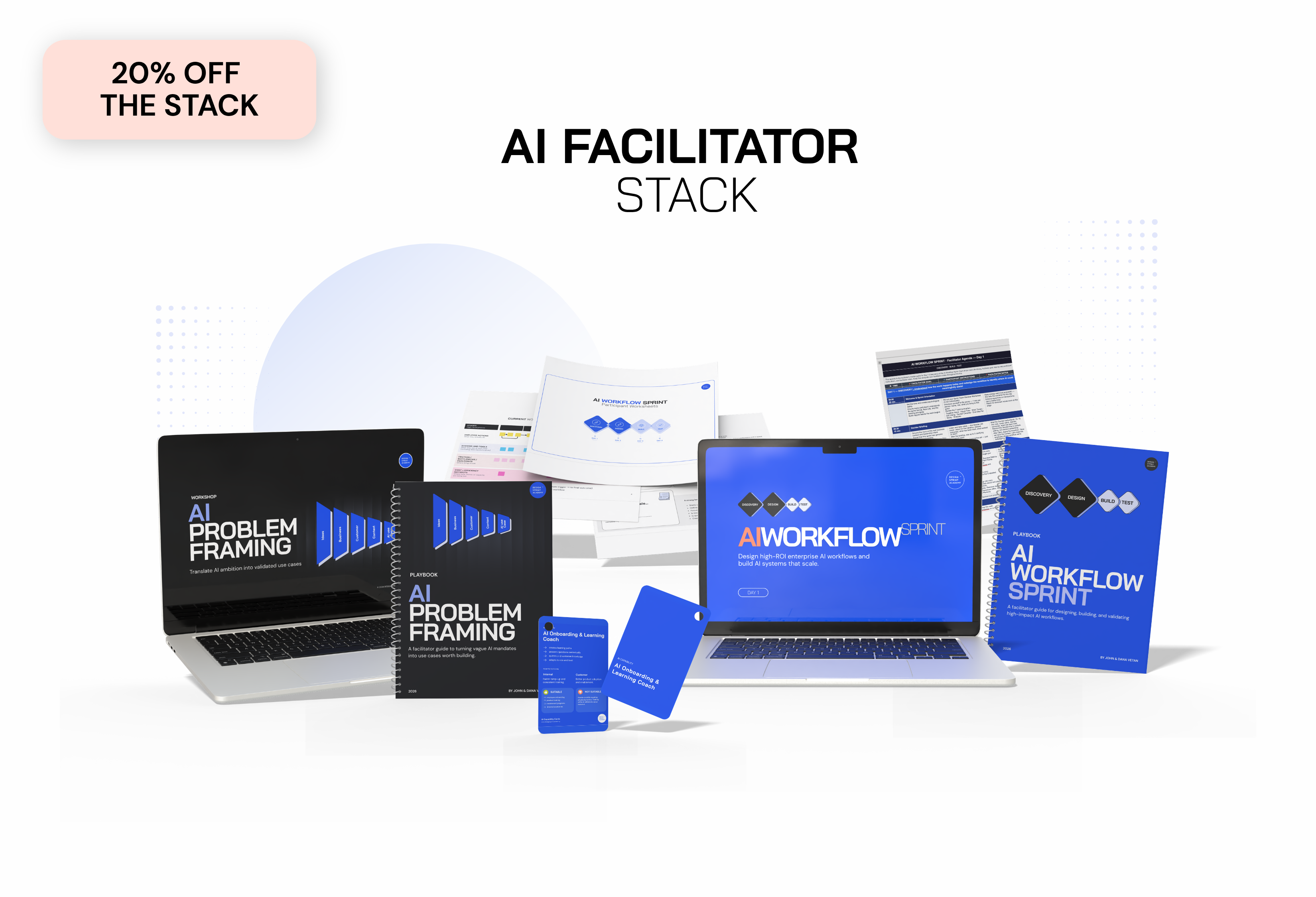
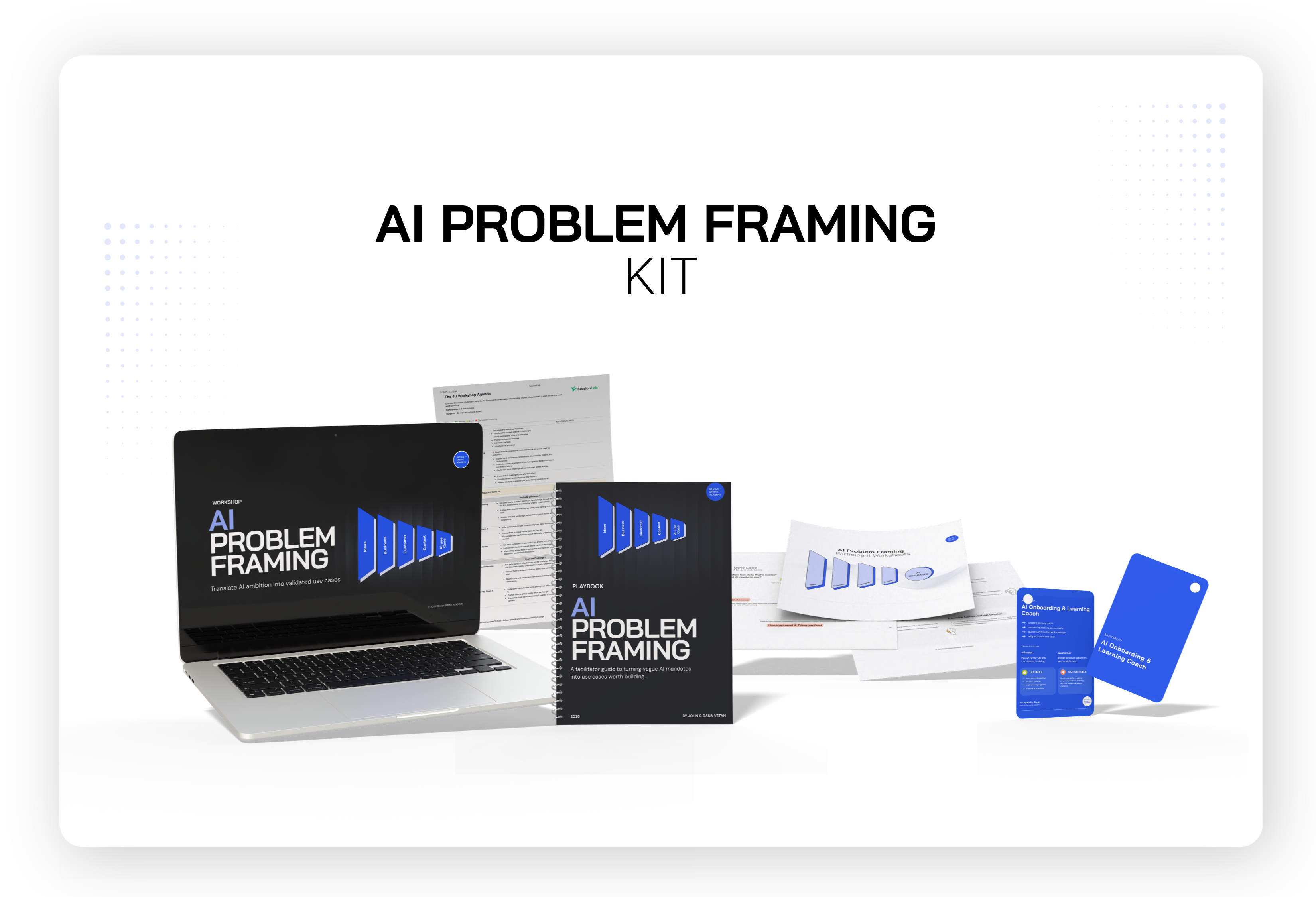
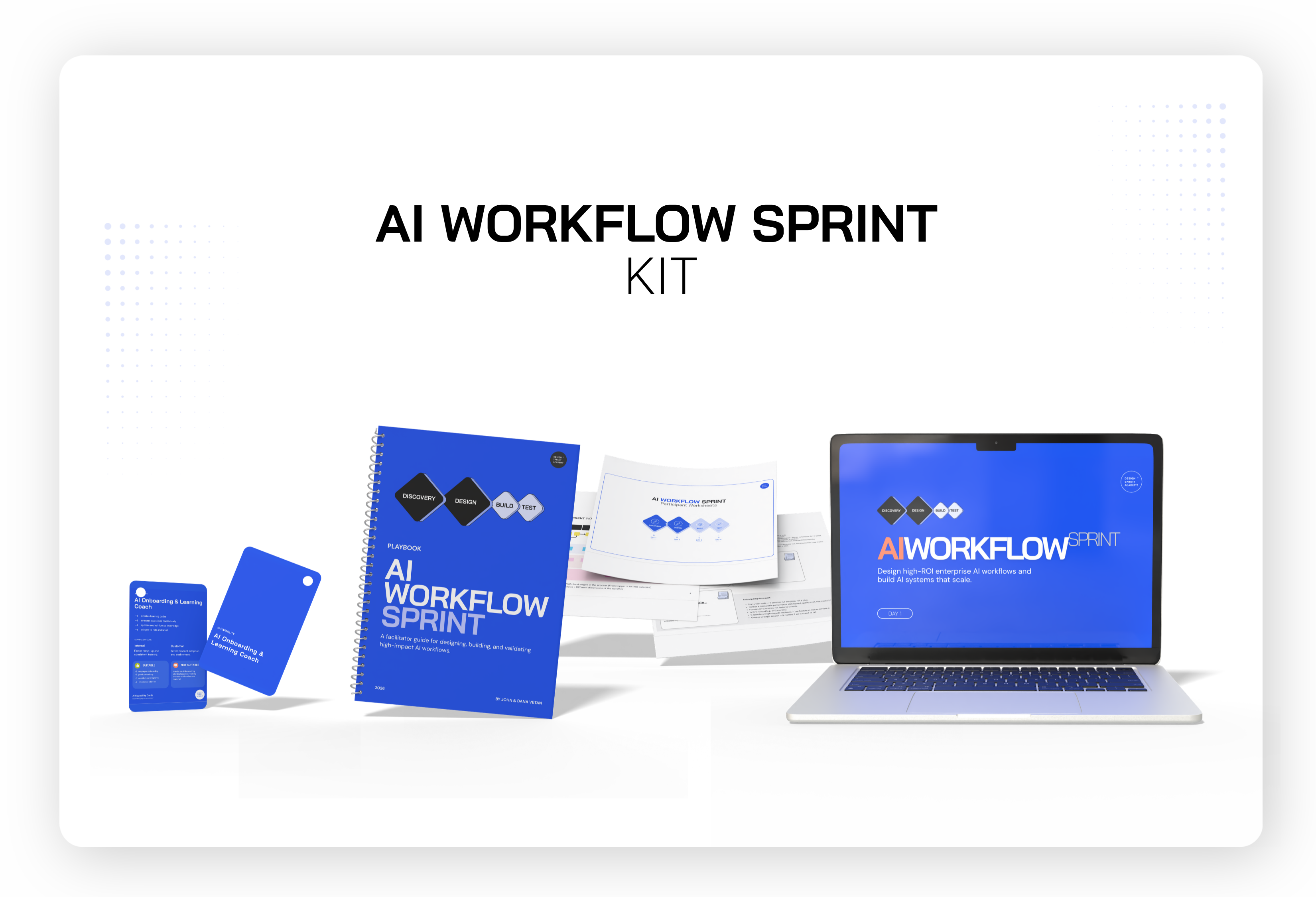
The AI Problem Framing Kit helps you guide a team to one AI use case they can stand behind — in a day. The AI Workflow Sprint Kit helps you build and validate the new workflow around it — in four.
What you'll be able to do.
You're stepping into the role every organization is about to need - the AI Orchestrator - the connective tissue that drives AI work with cross-functional teams making AI adoption stick.
Align a divided team on one shared decision.
Steer the team toward AI use cases worth the business's money — and their time.
Guide the team to redesign how the work gets done around AI.
Help the team validate an AI agent with the people who'll actually use it.
Own a framework that works for any AI workflow, in any industry.
Win repeatable client work — especially in highly standardized industries.
Two years of AI experiments. 95% still fail.
Not for lack of ambition, or tools. For lack of a clear way to decide. Organizations still don't have a path for making decisions around AI.
Leadership has ambitions. Teams have different definitions of what “good” looks like. Employees are skeptical about new ways of working. Progress is slow, and the ROI is nowhere.
This gap doesn't close on its own — and it doesn't close by doing more of the same. More AI pilots. More licenses. More people trained to prompt and vibe-code. None of that decides what's actually worth building.
It closes when cross-functional teams come together to make AI decisions as a team — when they look at the whole system and redesign the work around what AI can now do.
Someone has to bring those teams together and guide them there. That's the AI Facilitator.
A facilitator producing strategy-grade outputs at the speed of a workshop.
You turn AI ambition into decisions the business can act on.
Someone has to bring the right people together and guide them there. You'll see the role under different titles — AI Champion, AI Adoption Manager, AI Transformation Lead — but the job is the same. Here's what it looks like, start to finish.
Facilitate strategic alignment
Sit down with leadership and gather the areas where AI could actually move the business. Turn a broad mandate into a shortlist of opportunities worth exploring.
Assemble the AI Discovery Pod
Pull together a temporary, cross-functional team — product, IT, legal, data, operations — assembled for one purpose: to make the decision or solve the problem, then disband.
Run the workshops
Guide the Pod through the right session for the decision at hand.
Document the change, report to leadership
Capture what was decided and what changed, and bring the results back to leadership — so the next decision starts from evidence, not opinion.
By now, you know if this is you.
You're sitting on a pile of AI use cases with no way to rank them. Or you just got handed an AI session to lead — and you've never run one like it.
Either way, you're the one who now owns the room where AI decisions get made: a facilitator, consultant, AI champion, or adoption or transformation lead.
Get the AI Facilitator Stack →What works in a general workshop doesn't hold here.
A general workshop is judged by the session — energy, ideas, engagement. AI facilitation is judged by what's left after: the quality of the decision, the team's commitment to it, a workflow actually redesigned around AI, and an agent MVP validated with real users. Against that bar, some of the moves facilitators rely on quietly work against you.
Loose worked when ideas came one at a time. AI floods the room with more than anyone can read, and a loose session has no way to sort signal from noise. You end with energy and no decision.
Those surface ideas. An AI decision needs more: is it wanted, can you build it, is it safe — weighed together, in one call. The old tools were never built to get you there.
Engagement isn't commitment. People nod in the session and quietly opt out of the new workflow later. Commitment comes from how the decision gets made — not how good the room felt.
An AI workflow isn't the old workflow plus a model. Redesign the work around what AI changes, or you ship a slower version of what you already had.
A demo proves it runs. It doesn't prove the people who'll use it will. Only an MVP validated with real users tells you that.
It's the opposite. Everyone arrives with their own AI answer, and they don't match. Your day becomes reconciling ten machine outputs into one call the team shares — that takes more prep, not less.
None of this is a talent gap. It's a method gap — and it's the one a structured method closes.
You don't have to invent a new workshop. We already bulletproofed it.
You don't waste time designing a new AI workshop format — we've done that for you. These methods come from ten-plus years of running Problem Framing and Design Sprints across the globe, with some of the biggest brands in the world.
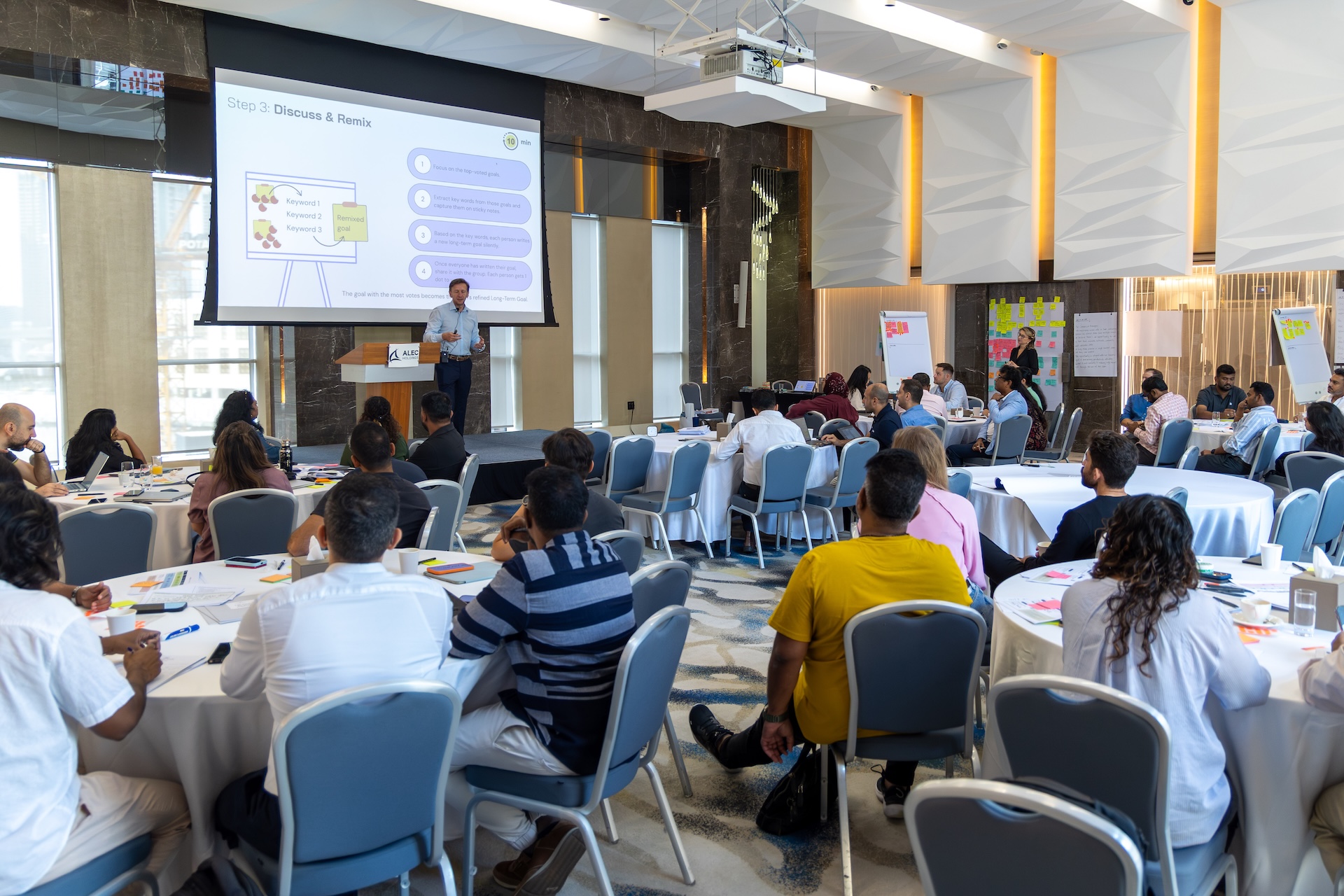
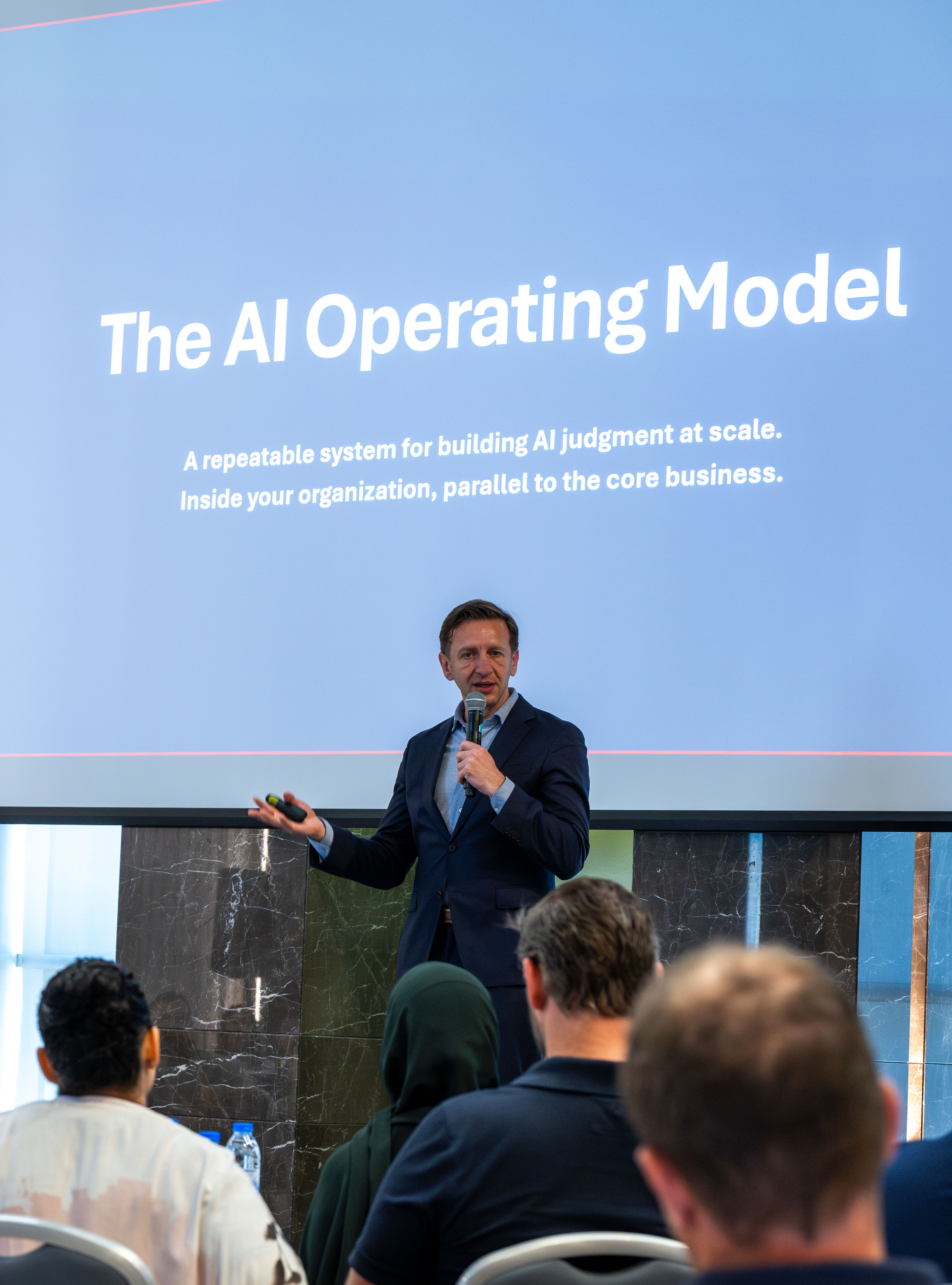
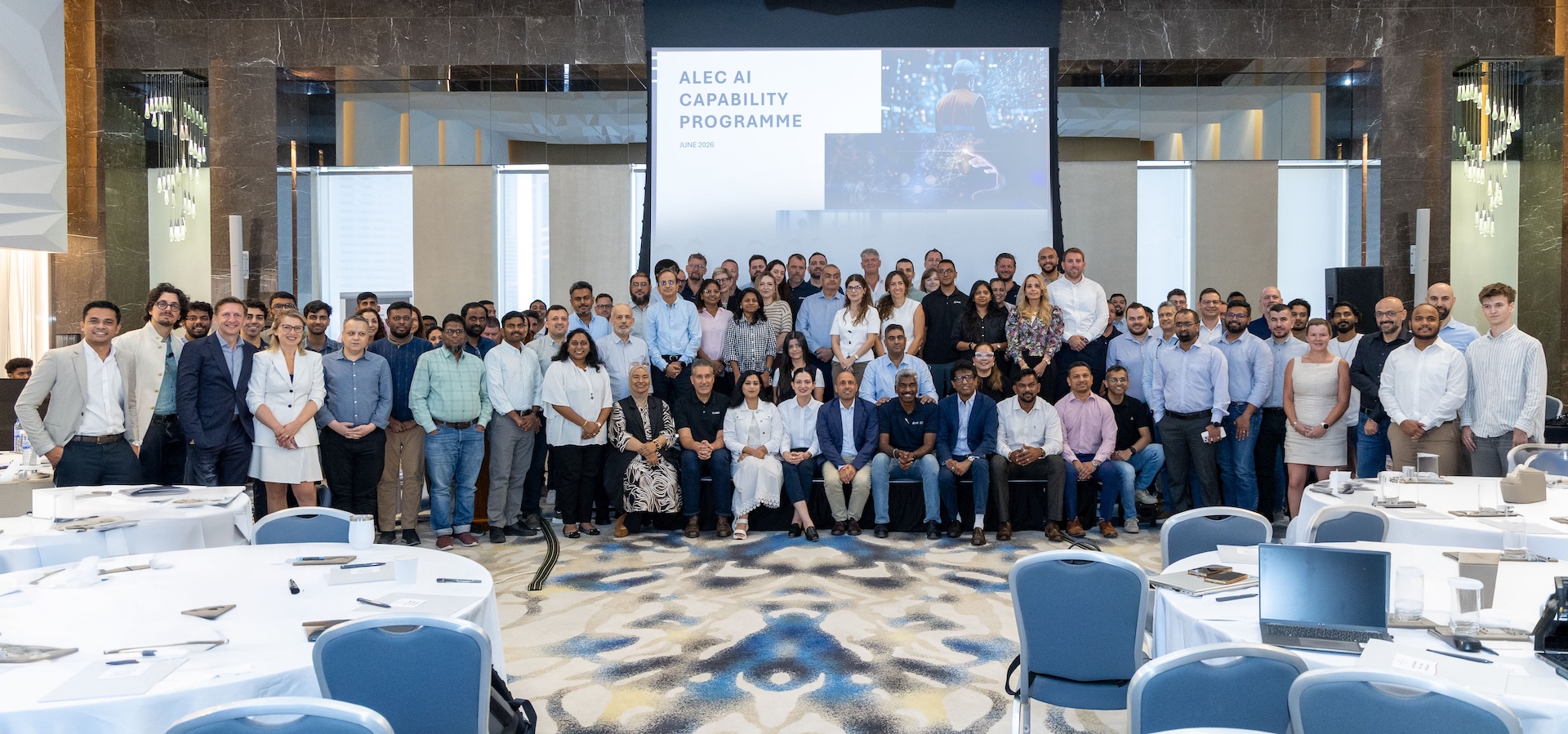
Just last month, we delivered a full AI capability program for ALEC — on these exact methods.
ALEC Holdings trained its internal AI champions in Problem Framing and the AI Workflow Sprint, then handed them these kits to run the sessions themselves.
“Being an ALEC Innovation Champion comes with a responsibility to stay ahead — and this workshop reinforced exactly why we champion a culture of continuous learning and forward-thinking.”
Everything you need to run each session, ready to go.
- ✓Workshop playbooks — a step-by-step facilitation manual: every activity explained, plus the mindset behind it
- ✓Minute-by-minute agendas — every activity mapped to a time block, with buffer built in
- ✓350+ facilitation slides (PowerPoint) — ready to present; run the workshops by simply following the slides
- ✓AI Capability Cards — built with AI coaches so the team fully understands what AI can do
- ✓Logistics sheets — room setup, materials, prep checklists
- ✓Participant worksheets — templates your group fills in while working through the activities
- ✓Commercial Facilitation License — run both workshops with your team or your clients
You stop being the facilitator the team enjoyed. You become the one they can't decide without.
You already run a strong workshop — that was never the question. What changes is what happens after the room: with a method, you own the decision, not just the discussion.
Here's what that's worth to you:
- →You deliver the exact solution to a problem that's top of mind for organizations right now — the specific decision they're stuck on, not a generic workshop.
- →You stop worrying AI will make your work obsolete. You're not competing with the model — you facilitate the exact decision it can't make for them.
- →You become one of the few early adopters who can actually answer “how?” — how to make better AI decisions, how to scale AI, how to transform the organization — because you have a process, not an opinion.
- →You stop charging by the hour and start charging for the value you create.
Built for facilitators ready to lead in the AI era — not for everyone.
You're a fit if
- ✓You already run strong workshops and want the method for AI decisions specifically
- ✓You're an internal AI champion, adoption lead, or transformation lead running AI sessions
- ✓You're an independent facilitator or consultant adding AI decision work to your practice
- ✓You have enough AI fluency to follow the conversation — you don't need to build models
You're not a fit if
- ✗You're after AI tool training or prompting courses — this is decision facilitation, not tooling
- ✗You're not planning to run these sessions yourself
- ✗You want to learn workshop facilitation from scratch — this builds on running workshops, it doesn't teach the basics
- ✗You're a team of one looking to brainstorm solo — this is built for guiding cross-functional teams, not yourself
Get the full method — both workshops, one stack.
20% off the Stack
The math is simple: one AI engagement you win with this covers the Stack several times over. One bad pilot you kill early saves a client months.