
Become the person teams rely on for AI decisions.
Learn how to turn AI strategy into decision-ready use cases and high-ROI AI workflows.
The teams you work with aren't asking for workshops. They're asking for results.
Leaders have vague AI mandates. Execution teams don't know what they mean. And everyone in the room is quietly afraid of being the organization that spent a year on AI pilots with nothing to show for it.
Maybe a client brought you in. Maybe your own leadership handed you the mandate. Either way, the expectation is the same: walk into that breakdown and come out with something real to show for it.
Most of what happens around AI today optimizes for the wrong things — tool demos, lunch-and-learns, workshops that run on energy and color-coded sticky notes. A room can feel great and still produce nothing. A rollout can hit every milestone and still change nothing.
The AI age rewards one thing: decisions people actually stand behind. A prioritized use case. A team aligned on what they're building, and accountable for what happens next.
Two methods. One to decide on a use case. One to design and validate the AI workflow.
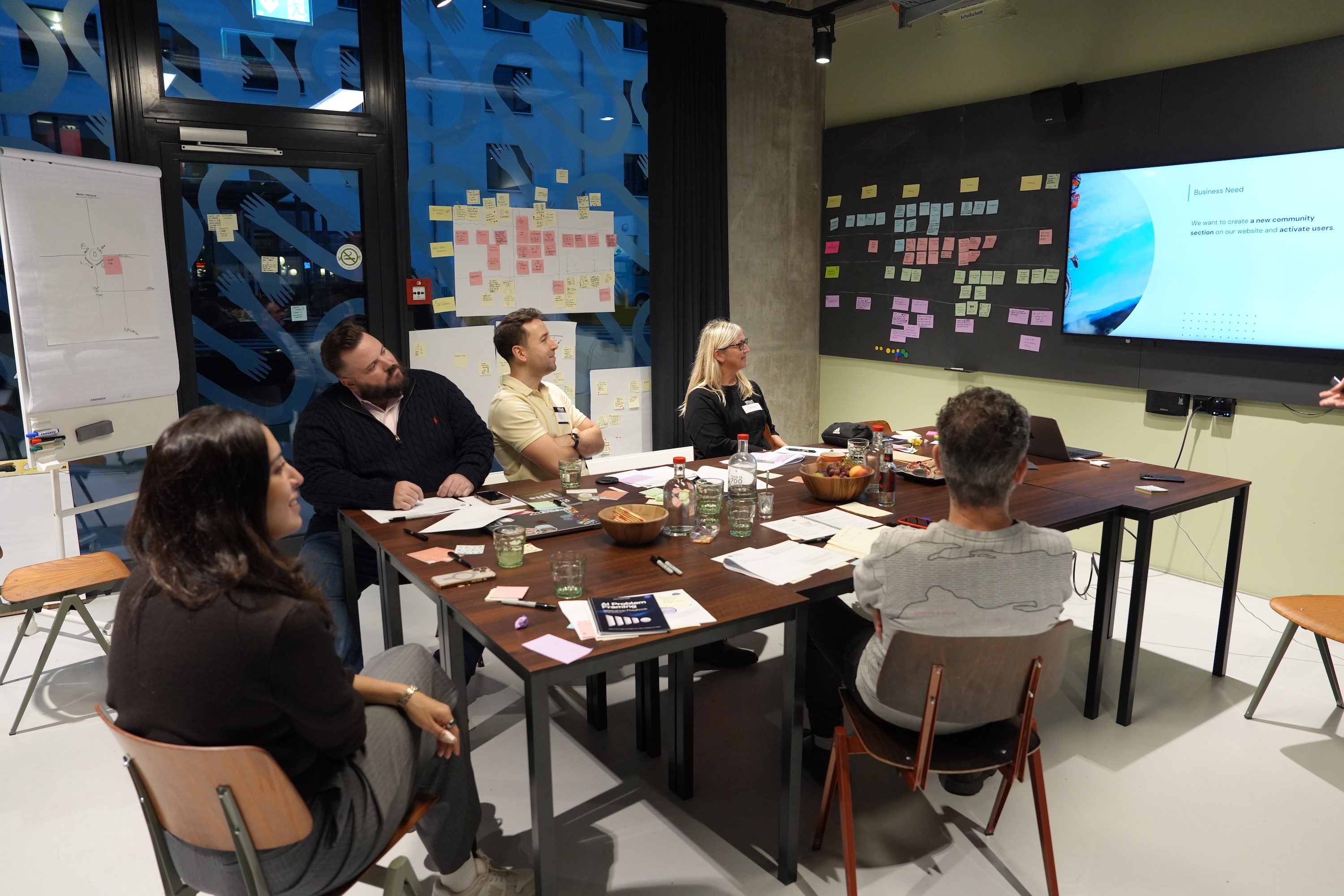
Each day is a complete facilitation experience — not a lecture. You practice in real conditions, get live coaching, and leave able to run it in front of any enterprise client.
AI Problem Framing
Guide teams from vague AI ambition to a focused, actionable opportunity — before anyone jumps to solutions.
- Spot high-impact AI opportunities hidden in vague ideas or executive mandates.
- Align stakeholders across business, technology, and operations.
- Frame the right problem by connecting business goals, user needs, and feasibility.
AI Workflow Sprint
Guide teams from a promising opportunity to a high-ROI AI workflow that product, data, and engineering can build.
- Map operational workflows and find the moments where AI creates real impact.
- Design human–AI collaboration inside the workflow.
- Turn a use case into a clear AI system blueprint, and surface data and governance constraints early.
Run in sequence, these two methods scale into real AI transformation.
Last month, ALEC Holdings — one of the Gulf's largest construction firms — ran exactly these methods to move 55 participants from a backlog of 45+ AI ideas to six validated use cases, six redesigned workflows, and a repeatable operating model for AI investment decisions. Not a standalone workshop — an operating capability the business kept.
Read the ALEC story →Taught by the people who built the methods.
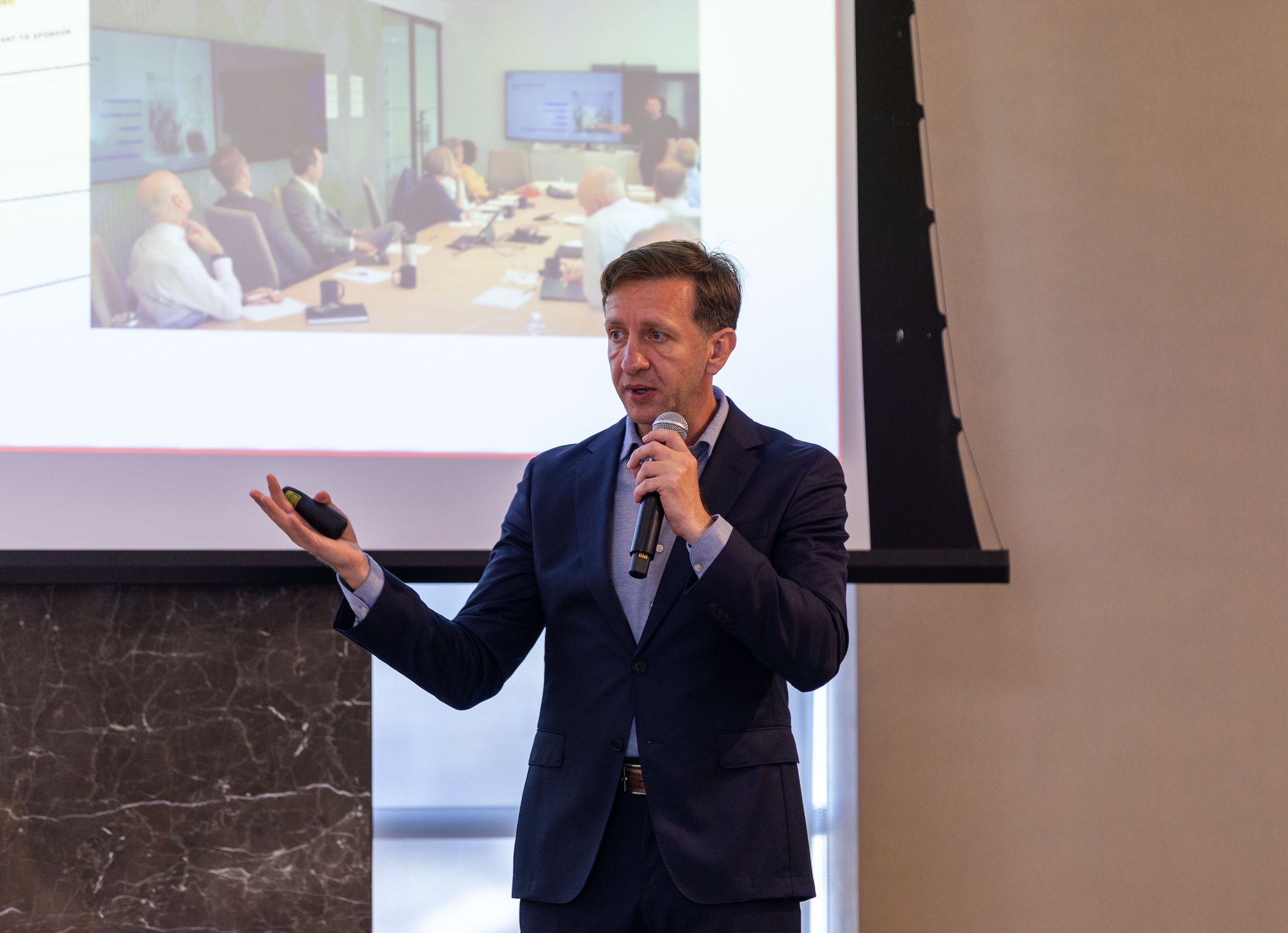
John leads Design Sprint Academy and its client work. With more than 20 years building software, he helps Fortune 500 leaders and executive teams turn ambiguity into aligned action when the stakes are highest. He brought Problem Framing into Google in 2018, and has spent the years since embedding these methods inside organizations like Caterpillar, eBay, Nupco, ENOC, EML, Turner Construction, and the World Bank.

Dana's background is in psychology, and it shapes how she designs the training and builds the methods behind it — AI Problem Framing, the AI Workflow Sprint, and the AI Design Sprint — rebuilt over the last two years for teams making high-stakes decisions with AI in the room. She's worked with SAP, HSBC, the International Monetary Fund (IMF), RGA, and Google, where she's also spoken on bias.
For those who want to turn AI strategy into reality.
For experienced practitioners pulled into AI strategy conversations who want a structured method to deliver decisions teams act on.
Facilitators, Agile Coaches, Consultants
You turn ambiguity into alignment. This gives you the AI-specific system to do it where the stakes are highest — and make it your signature workshop.
Innovation Leaders & Product Managers
You're expected to separate real opportunities from hype. This is a structured way to filter fast, validate what's worth building, and point engineering at the right problem.
AI Adoption Managers & AI Champions
You know the gap between AI pilots and real adoption is an alignment problem, not a technology one. This gives you the tools to close it from the inside.

Access to the full AI Facilitator Stack.
The exact recipe you'll run in real workshops with teams — fully customizable, and bulletproofed at DSA over two years of trial, error, and real client work.
See everything inside the Stack →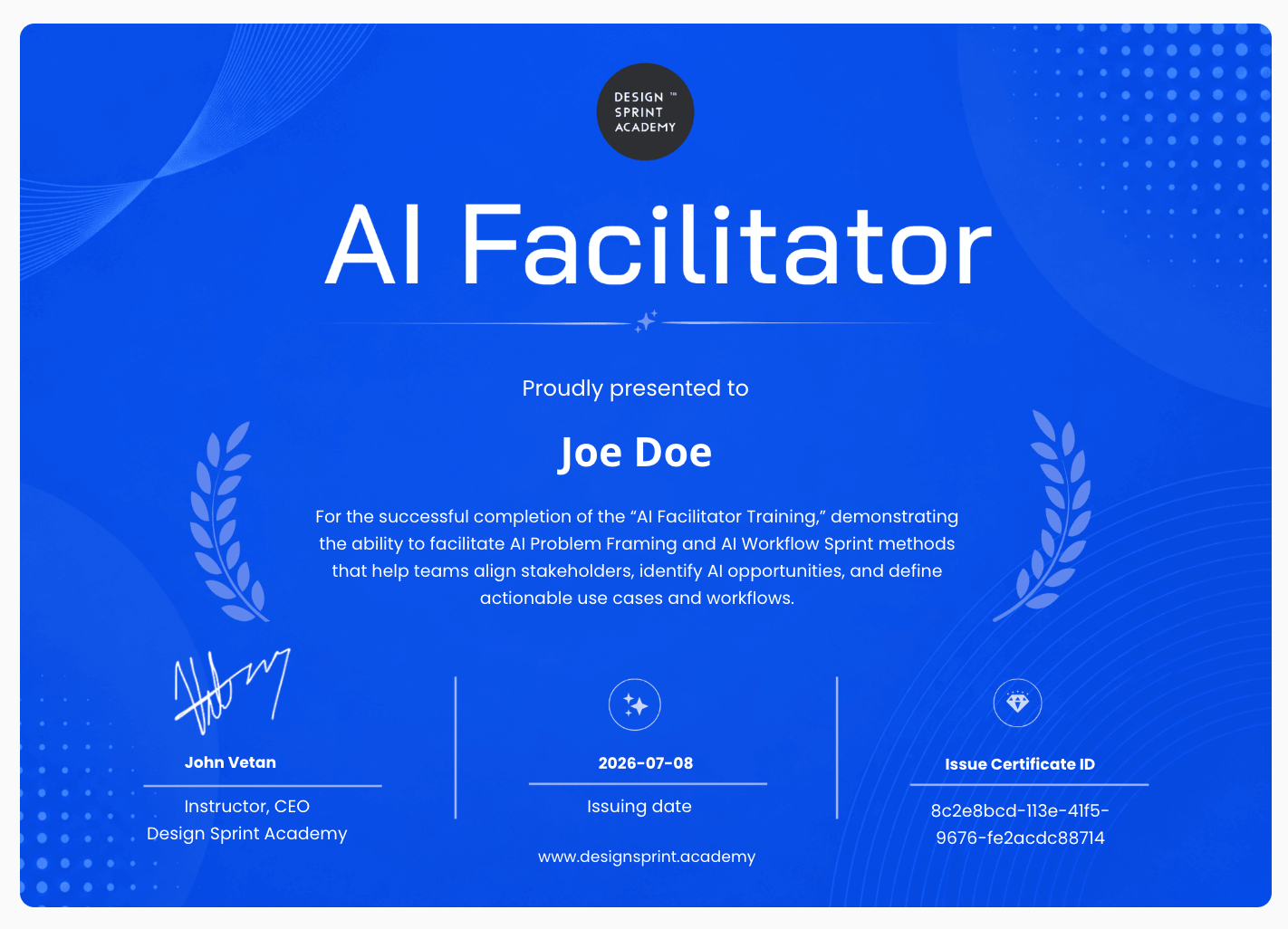
You leave a certified AI Facilitator.
Proof you can put in front of clients and leadership — a credential that backs the role, not just a line on a CV.
- A verifiable certificate ID, issued by Design Sprint Academy.
- Yours to share on LinkedIn, in proposals, and in the business case you take to leadership.
- Recognized across the alumni network you join: practitioners from Google, BCG, SAP, and the World Bank.
One cohort left for 2026.
Eight seats, small by design — so you get real coaching time.
2026
2026
2026
Not sure it's the right fit? Talk it through before committing.
Book a 20-minute callThree days of learning. A community that lasts.
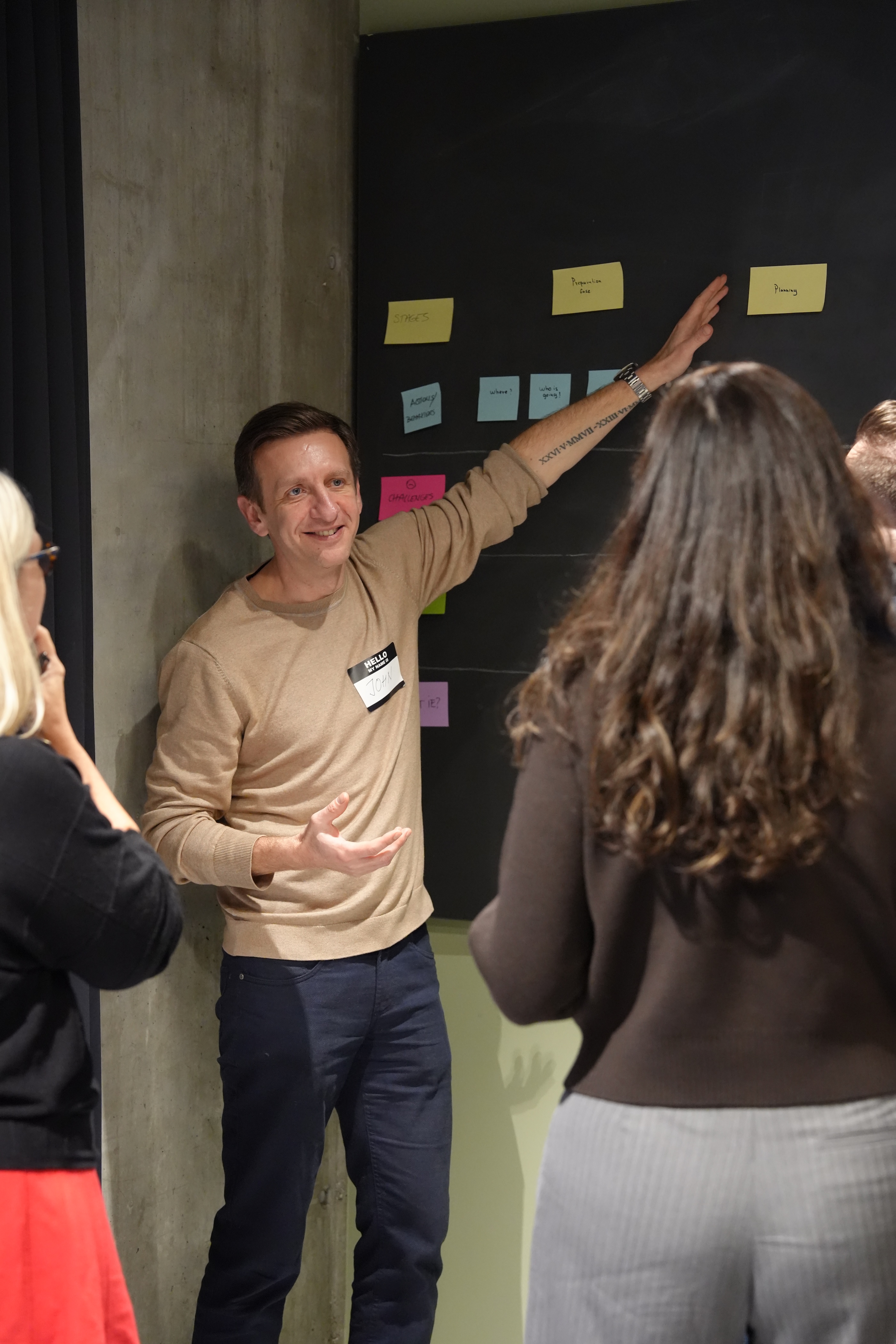

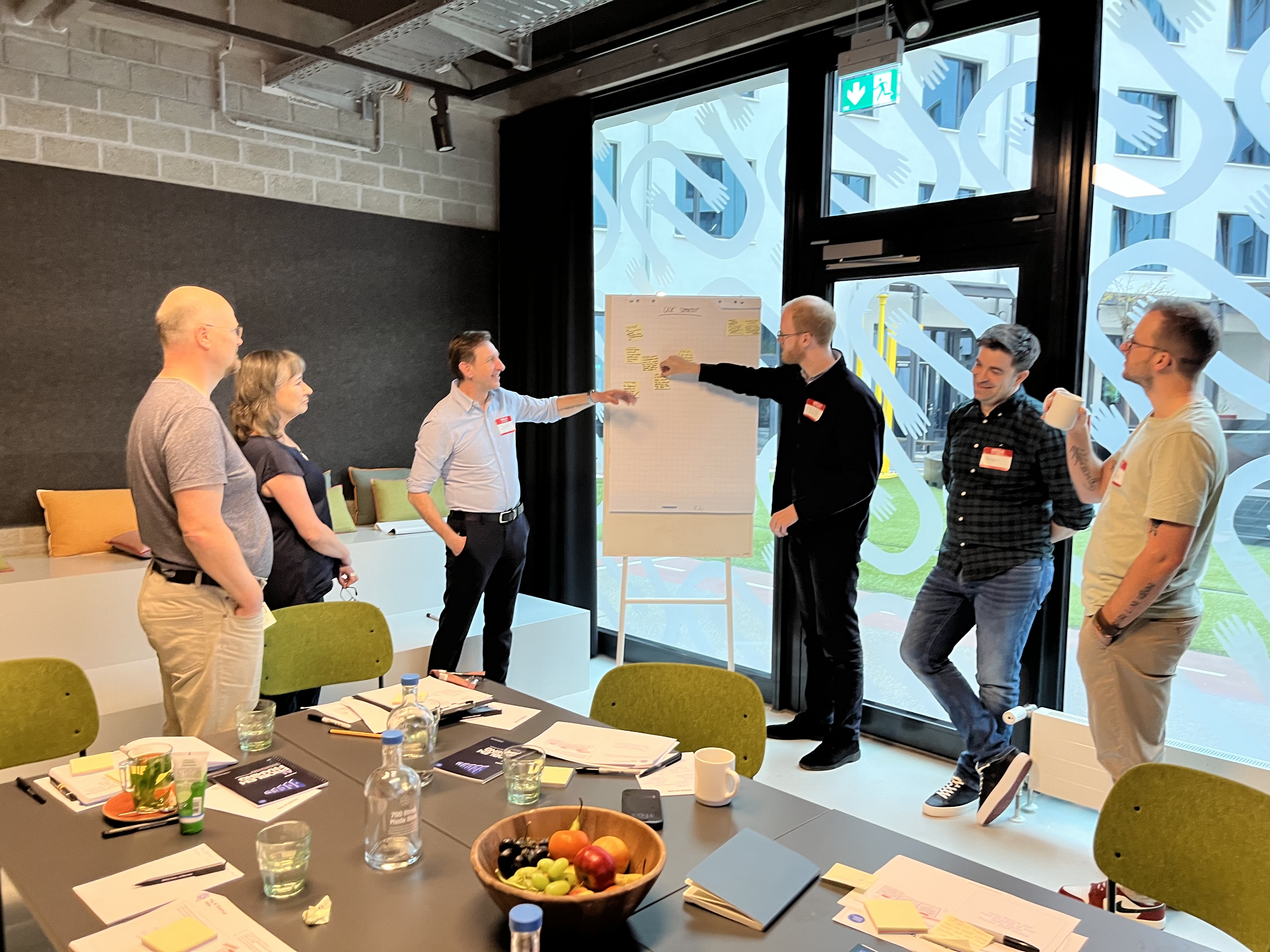
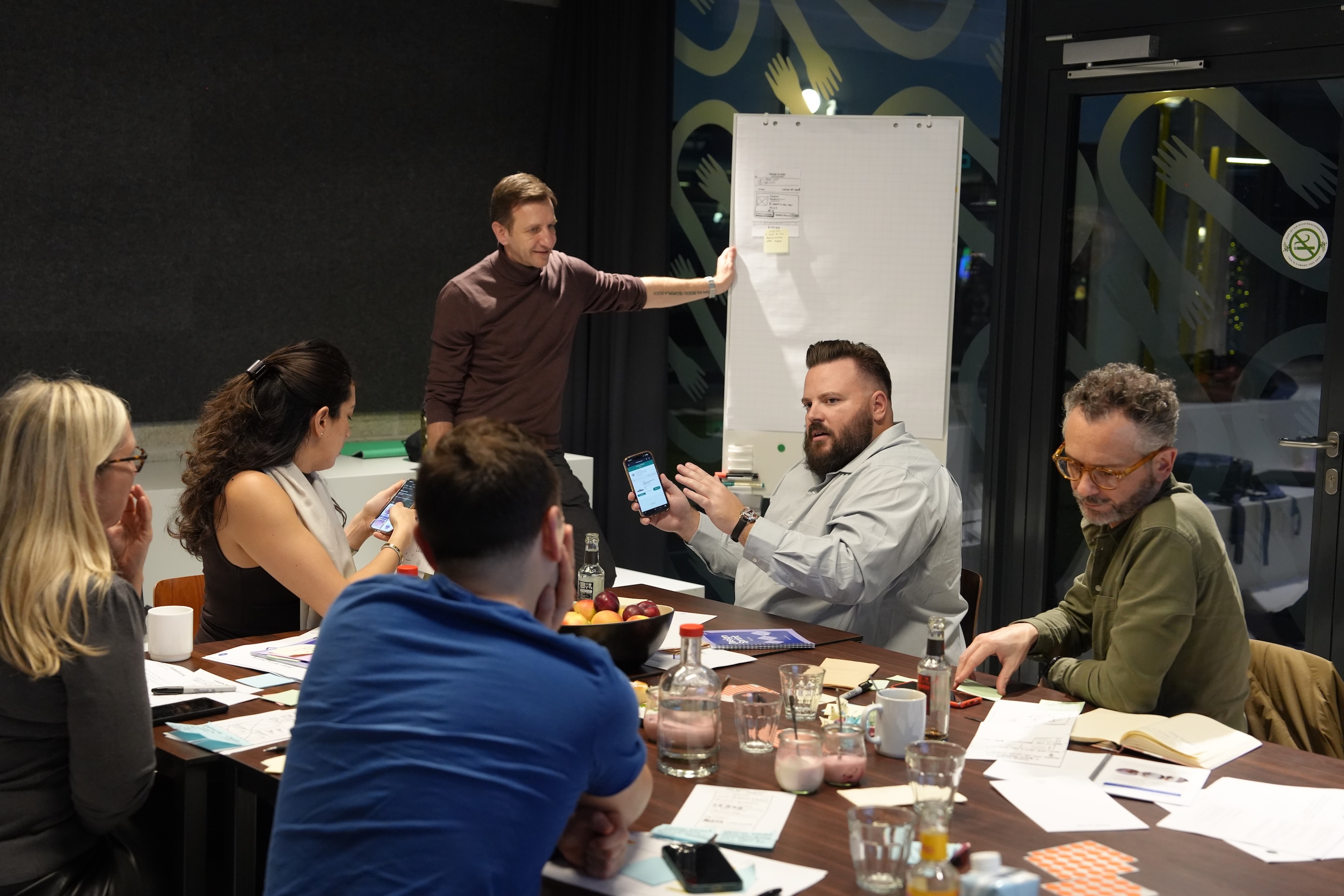



Networking dinner
A hosted dinner at a selected local venue — an informal setting to keep conversations going with people doing the same work you are.
Evening local experience
A curated evening activity that varies by season — boat trips, guided bike tours, cultural visits. Always worth showing up for.
Alumni network
Join a cohort of practitioners from Google, BCG, SAP, and the World Bank. After a decade of training, the network is one of the most lasting assets.
Program schedule
- A delicious lunch break midday.
- Refreshments and short breaks every 90 minutes to keep energy high.
- A focused, high-impact schedule designed for deep learning and meaningful connection.
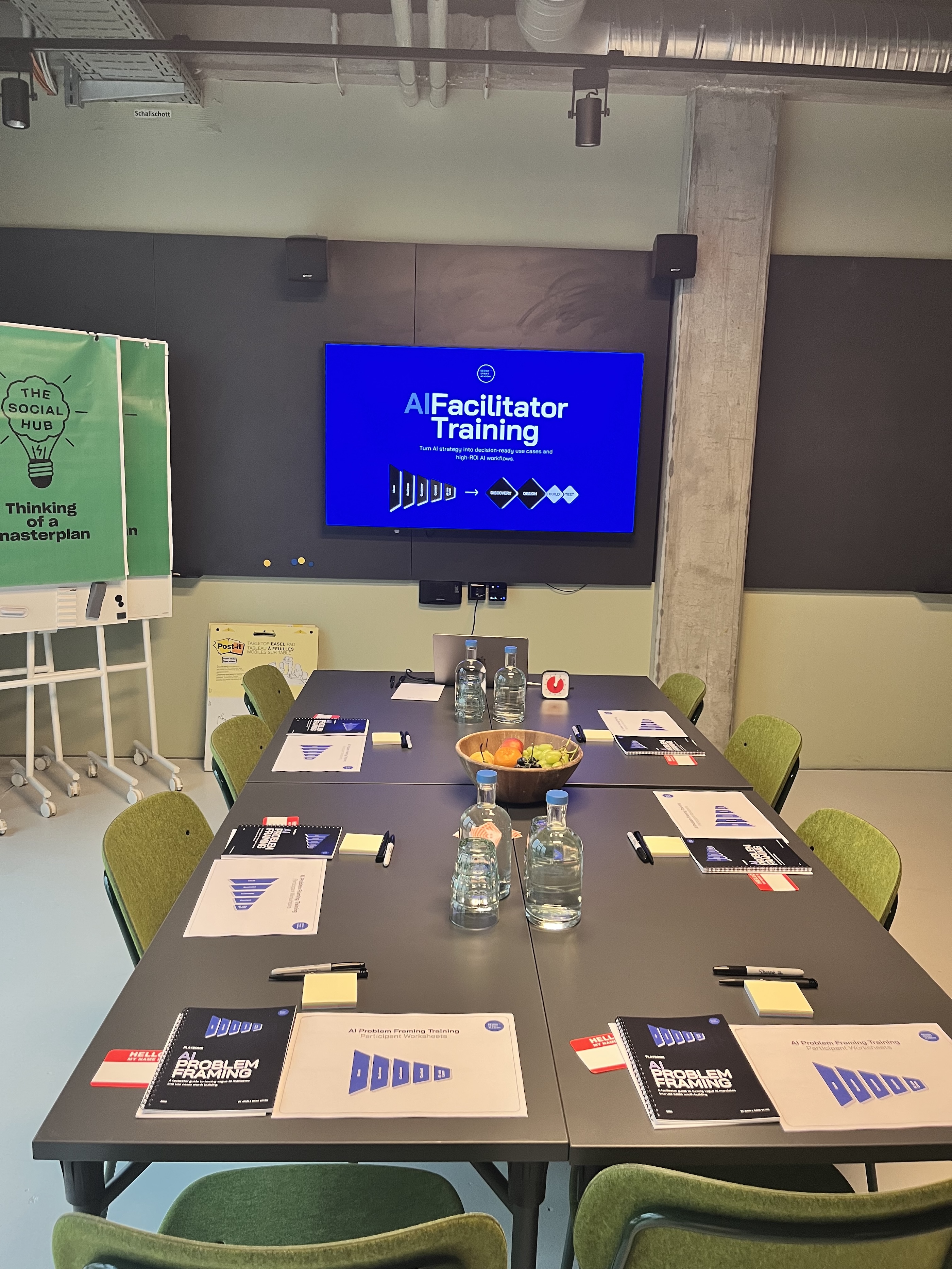
The venue — The Social Hub Berlin
Our sessions take place at The Social Hub Berlin, a modern creative space built for learning, collaboration, and comfort — right in the city center.
See the venue →Facilitators now running AI workshops that drive real value.
"Beyond the frameworks and tools, the biggest takeaway for me was a reminder that the strongest AI solutions don't start with technology — they start with people. The most impactful approach I've seen is deeply human: bringing the right minds together, creating space for structured thinking, informed decision-making, and real alignment. Grateful for the learning, the people, and the experience — one I won't forget anytime soon."

"Definitely one of the best trainings I've attended. You didn't just deliver, you went above and beyond. Still riding the afterglow."

"Most AI projects don't fail at execution. They fail before even getting started. During the training I learned tricks from the masters to refine the approach I use with teams — structured collaboration where the right voices work together from the start. It's about moving teams early into a collaborative think-tank mode, where structured conversations lead to better decisions, faster."

"“Heads turn”… mine did! Your toolkit is another level. It gives the facilitators and the sprint team the confidence to plough on."

"After 20 years working in tech, I've seen again and again that organizations don't struggle with new technology because of the technology itself, but because of poor problem framing and ineffective alignment. When teams use structured methods like AI Problem Framing and Design Sprint together with AI tools, they move faster, make better decisions, and reduce the risk of building the wrong thing well. I feel very fortunate to have learned alongside practitioners with deep experience in design sprints, AI adoption, and real-world innovation."

"Such an incredible experience, so many invaluable reflections, and above all such a special space with an incredible group — being able to think about how to redesign for this moment."

FAQs
What will I actually get out of this experience?
Can my company pay for it or reimburse me?
How will this help my career?
I'm an internal AI adoption or transformation lead, not a consultant. Is this still for me?
Do I need to know AI or be technical?
How big is the group?
I already use AI tools — is this still relevant for me?
What if I can’t make it to my scheduled cohort?
Why should I invest in this instead of an online course?
What kind of people usually attend?
What’s included in my ticket?
Who are the instructors?
Success with AI comes from guiding teams to think clearly, make better decisions, and build the muscle to keep adapting. That takes a method.
Three days. Berlin. Eight seats. A complete toolkit you can put your name on.
